I watched the second episode in Penitence on Warhammer TV, a show about the Adepta Sororitas of the Order of the Sacred Rose. This is my review of it, with only minor spoilers, most of which we got from the early trailers of the show.
This episode starts where the previous one left off, with the Sisters of Battle walking into a raging and almost impenetrable dust (or ash, more likely) storm. Obviously it's part of any 40k citizen's standard gear to have a mask on them, but the least believable thing about the entire show so far is that Venthia isn't wearing goggles in the storm. Anyway, they're attacked by Orks in the storm, of course.
The Orks in this episode are treated as they were in the previous episode. They're mostly off screen, with one brief scene of angry Ork dialogue.
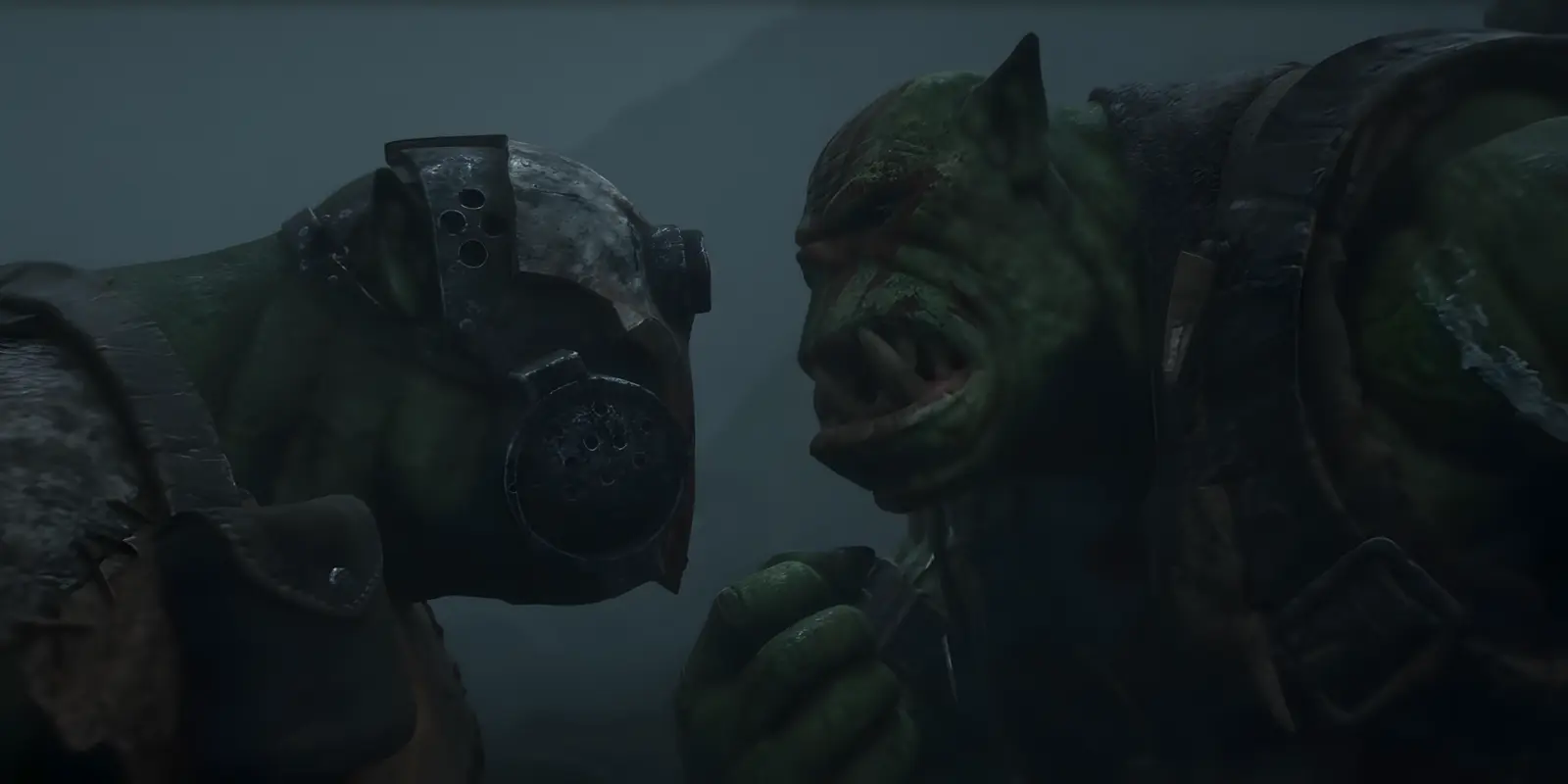
When they are on screen, though, they work really well. I wasn't sure how they were going in the first episode, but their scene in this one felt proper Orky to me. There's nothing goofy about them, and instead they come across as marauding raiders using stolen and upcycled wargear to slake their endless thirst for violence.
Interestingly, the leader seems to believe that there's fighting to be done on Thesion IV, but I see why his boyz would doubt him. Empirically, there doesn't seem to be much opportunity for fighting any more on Thesion IV. Sure, there are 3 Sisters of Battle but that's the only sign of non-Ork life we've seen so far. As far as I can tell, it's a dead world.
I'm not sure what to make of this dissonance. I'm assuming it's a minor plot point, but I can't decide whether this particular warlord just has a vendetta against the Adepta Sororitas, or whether he's deluded, or whether he's just plain wrong. Or maybe there are battles happening off screen that the show hasn't established for us yet.
Irresolute divine intervention
In the dust storm, Venthia appears to have a vision. It's a Sister of Battle, but she's far away so it's difficult for Venthia (and us) to make her out. It's definitely not the Emperor, but could it be the Canoness Rexilla? Or maybe someone lost on the ship that was gunned down? Or maybe someone who was thought to be lost? Or a character we aren't even expected to know?
Whatever and whomever the apparition is, it leads Venthia out of the storm, and Ludmilla and Saragoza follow.

I'm being coy because I actually do know who the apparition is, and you do find out in this episode. The answer will surprise you.
I enjoyed the previous episode, but this one is extremely satisfying.
But while I'm on the subject of divinity, I may as well talk about salvation and Cult Imperialis. Or rather, about how there is no salvation in Cult Imperialis.
We don't see that many death rites in 40k, interestingly. I think part of that is because there's so much death that we comparatively only see a few of the moments serene enough to perform any kind of last rite. It's often tempting to look at Cult Imperialis and think of it as a stand-in for Christianity, especially given 40k's foundation in the historical Roman Empire of the real world. Christianity took that empire by storm, so why not assume Cult Imperialis is the scifi version of that?
There are obviously lots of differences, despite some of the similar visual languages, like cathedrals, Ministorum robes that look familiar to anyone who's attended a high liturgy service or Mass, an "I" logo that looks a little crucifix-like. For me, this episode emphasises the theological differences. The Adepta Sororitas are clergywomen of the Ministorum. They're a cleric class in this space fantasy world. If anyone has a guaranteed pass into heaven, or whatever, it would surely be them. And yet when discussing or facing death, it strikes me that the Sisters of Battle seem openly dubious about their afterlife.
So far, in this series, when a Sister of Battle prays over the dead, or believes she herself is near death, she essentially begs the God Emperor to favour her and to bring her into his divine presence. Even a Sister of Battle, a holy warrior for the God Emperor's church, and who may well have died while battling in the Emperor's name, doesn't take salvation for granted.
Maybe in some religions that's not uncommon, but I know that the majority of Christian denominations define themselves by a belief in absolute assurance that once you're "saved", then you're "saved." Many of them claim to believe that the condition is irrevocable (although they may make exceptions for people they especially dislike, such as homosexuals, people with certain political beliefs, sex workers, and so on.) In Cult Imperialis, you're evidently never "saved" from whatever "sin" is out there (the ones I can think of are heresy, consorting with xenos, dereliction of civic duties.)
It makes sense, too. In 40k, the chaos of the Warp can seize anyone at any moment. You could be a psyker without realising it, or a xenos spawn, or a mutant. You may not have worked your hardest for the Imperium. Maybe you thought you did, but then again you could have worked until you dropped from exhaustion every day. Wasn't a little selfish of you to go home at the end of your shift, instead of volunteering to work another one?
I imagine there are intentionally no guidelines for what's enough. Why would the Ministorum define the concept of done? You can never be done, because only in death does duty end. Until then, your only hope for a glorious afterlife is to try to achieve a theoretical state of having done enough for a church that believes you cannot ever do enough.
Good Warhammer
Penitent is still impressing me. I love the insight (or invite, as the case may be) into lore it provides, and this episode lived up to its subtitle of Revelation.
All images in this post copyright Games Workshop.