I love dungeon crawls, and I enjoy Fantasy Flight board games, and I'm a fan and player of Warhammer. What if there was a way to combine all 3 of these interests into a single experience? Well, there is, and it's called Warhammer Quest Adventure Card Game, published by Fantasy Flight back in 2015. i only found out about it last year. That's well over a decade after its release, and in the intervening time Warhammer [Fantasy] was discontinued in favour of Warhammer: Age of Sigmar and then reborn as Warhammer: Old World. But during the same time, I've played Warhammer Quest: Blackstone Fortress and Warhammer Quest: Cursed City, so I was ready to delve (that's what you do, when speaking about dungeon crawls) into another quest.
What is Warhammer Quest?
Originally, the term "Warhammer Quest" referred to exactly one board game released back in 1995 as a successor to HeroQuest. It was a one-off boxed game until Silver Tower was released 10 years later, with the supertitle of Warhammer Quest.
Several more quests have followed, and they've all been independent games with a certain design concepts in common.
- Adventuring party: The Warhammer Quest games are all structured around a party of adventurers, very much like a classic D&D group. That technically makes it a skirmish game, in the terminology of wargames, but the intent is clearly to enable roleplay rather than to focus on small-scale tactics.
- Wargame roleplay: Roleplaying games were borne of wargames. The intent was to scale down a wargame so that each player takes on the role of just one character (rather than controlling an entire army.) Somewhere along the way, roleplaying games became flexible enough that they can double for improv theatre, which is fun and all, but there's another style of roleplay that focuses just on the tactical decisions a player makes based on the character. That's the kind of roleplay Warhammer Quest tends to provide.
- Dungeon crawl: All Warhammer Quests have been dungeon crawls, at least in spirit. The locations are limited and mostly known factors, the goals are specific and well-defined, the environment is often a mark of progress, and the adventurers are exploring as much as they are fighting.
The fact that Fighting Fantasy released a Warhammer Quest game is a little unique, or looked at from a different angle, not unique at all. HeroQuest itself was itself a collaborative effort between Games Workshop and Milton Bradley, so even though most Warhammer Quest games were published exclusively by Games Workshop it does make some poetic sense that one should be a collaboration with another prominent board game producer.
Warhammer Quest as an adventure card game
I'm an avid player of Pathfinder Adventure Card Game, which has no connection (that I know of) to Warhammer Quest or Fantasy Flight. However, both games implement the same premise of abstracting the physical aspect of a dungeon crawl so that it's represented by encounters and actions defined by cards. Players must make decisions based on available resources that are provided by statistics on character and monster and location cards. Event cards provide rewards and the occasional trap. In other words, it's all the mechanics of a dungeon crawl like you might play in a game of D&D or Dungeoneer or HeroQuest or Blackstone Fortress but devoid of any representation of the physical layout of the spaces you're exploring.
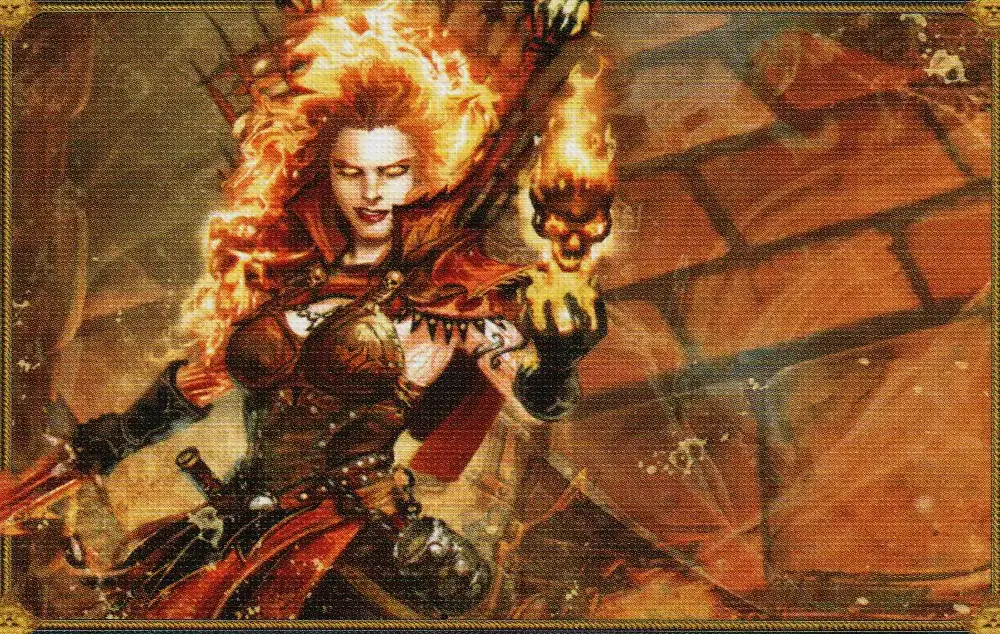
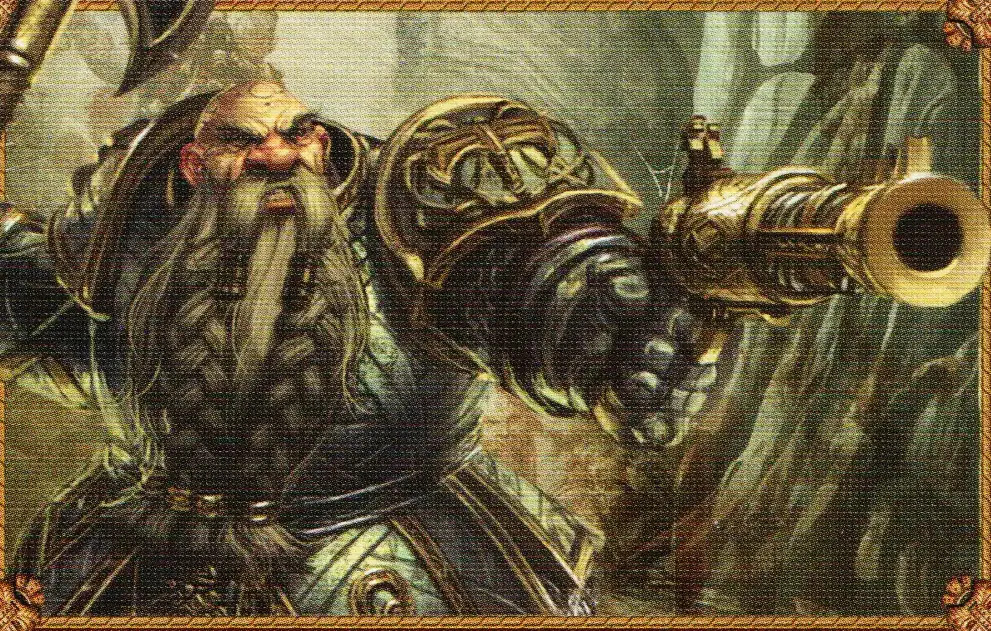
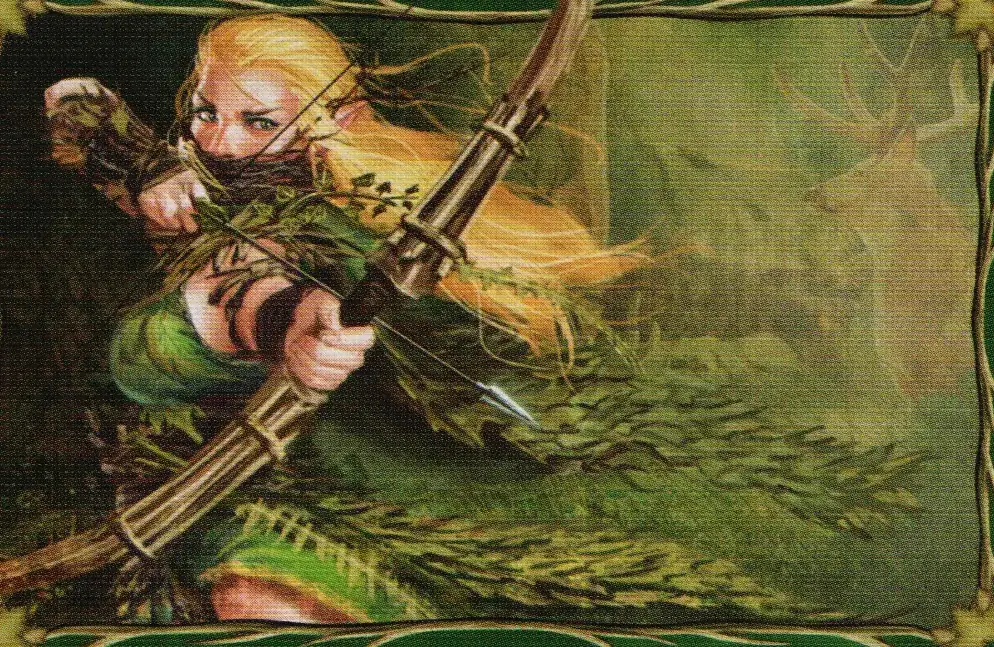
Because I've seen it done in other games, it came as no surprise that this works really well in Warhammer Quest Adventure Card Game. There are 4 characters to choose from, including a dwarf tank, an elf sniper, a human cleric of Sigmar, and a "bright wizard" specialising in fire magic. A pretty classic combination, or at least a lot of classic touchstones. Characters start with a set of basic actions, but can explore to find relics and equipment to help them along the way. As they progress through the quest, the characters level up and acquire advanced skills and greater level of health.
The core mechanic, at least on the surface, is to delve into locations (like the sewer, or a spider's lair), each of which is represented on a single card, and explore the location until you've reached its exploration limit, while also killing the enemies you find there. That's basically the definition of a dungeon crawl, so the job of the game design is, at least from the technical viewpoint, done and dusted. That game loop works exactly as designed, it evokes exactly what it claims to be implementing. And it does it in a fun and challenging way.
Challenging gameplay
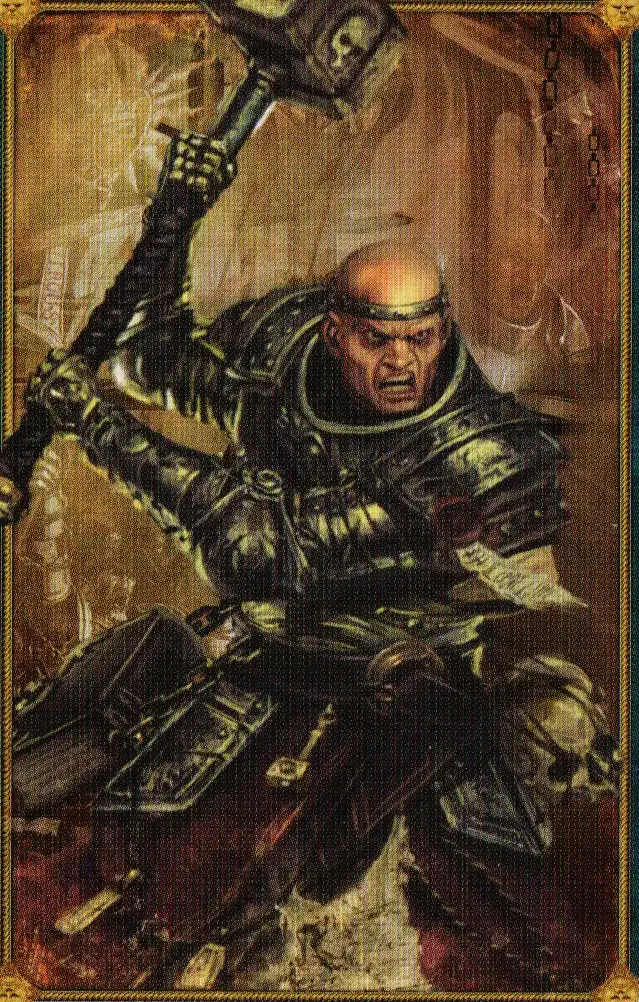
The challenge you face as a player in Warhammer Quest Adventure Card Game is finding the necessary balance between exploration, combat, and health. Unlike most other Warhammer Quest games, the wound count in this game is quite high. The dwarf is the heartiest with 14 wounds at his lowest level, and even the wizard starts with 10. The Rest action, one of only 4 core actions you have to choose from, provides healing, so you can actively look after your health, and therein lies that very addictive, and secretly the core mechanic: The game of "chicken."
With 10 or 14 or, eventually, 26 wounds to spare, you quickly find yourself exploring and attacking when you should be resting. You don't do it out of disregard for your own life, you do it strategically, with purpose. Exploration is how you close locations and find treasure that's likely to help you on your quest. Attacking the enemies lurking in the shadows is an obvious way to preserve your own life, and in the long-term it's more directly addressing the problem than just bandaging your wounds. But the way actions are used and exhausted in the game means that you can only rest so often anyway, and when you do rest you're only healing a few wounds unless you roll a series of critical successes, so you're constantly forced to choose between inaction (resting to heal) or an almost certainly h harmful but also helpful action (attack), or doing whatever it takes to restore your actions to their readied state.
Exhausting and readying actions
One action among the 4 that you have to choose from also inherently resets your pool of actions. This is an interesting mechanic for several reasons. First, every character has a unique version of each action. The elven archer's attack is completely different than the dwarf's attack, both in power and what it can target.
Additionally, the action that triggers a total action reset differs across each character. The elf archer's Attack action resets itself and all other exhausted actions when played, but for the dwarf it's his Aid action that resets, and the cleric's Rest action, and the wizard's Explore action. This means that each character has a definite specialty that, in an ideal scenario, they would just keep doing non-stop, optimising their usefulness to the party. But one doesn't crawl a dungeon because it's the ideal scenario. What actually happens during the game is that enemies attack and traps get triggered and monsters multiply, and surprises that nobody saw coming suddenly emerge from the shadows. Suddenly your characters don't have the luxury of just focusing on what they do best, and instead must make the tough choices between helping each other, attacking the nearest monster, desperately searching for an item to produce some wondrous effect, or taking time to heal. It's mayhem, but in a very calculated and strategic way. And it's a highly satisfying way to progress through a dungeon.
Quests and heroes
By the time Warhammer Quest Adventure Card Game came out, Warhammer Fantasy Role Play had been a thing for almost 20 years. Between that and HeroQuest, I took it for granted that Warhammer Quest Adventure Card Game would anchor itself in roleplaying. Strangely, though, the game provides no information or lore about its characters. They don't even get names. There's some information here and there in the form of flavour text, which I do love, but I guess I'd expected at least the kind of character description you get with Mansions of Madness.
I guess it could be argued that nothing could be better for roleplay, because a blank slate forces you to come up with backstories and names yourself. But personally when I get a prebuilt character I prefer to get the whole character. I like a backstory to draw from, and at least a name or a random table of names so I can generate one.
To be fair, Fantasy Flight doesn't market the game as a roleplaying card game. It calls the game an Adventure Card Game, and they do provide adventure and cards, so my desire for roleplay prompts is based on my own expectations and preferences.
What the box does provide is a campaign called An Uneasy Alliance plus a Lost in the Dark stand-alone delve. This is a nice touch. Sometimes you don't want to feel like you're signing up for a full campaign (and then feeling bad about not getting through it, and having to start back at its beginning in 6 months because you've forgotten everything), but you still want to play a quick dungeon crawl. The delve isn't easy, and you don't want it to be, but it's a fun scramble for loot and a test of your mettle. The campaign tells a story that obviously becomes familiar once you've played through it once, but it's highly replayable because it's a card game with lots of potential for variation in what events get triggered, what state the players are in at any given moment, how the enemies react, and so on.
Fun addition to the Warhammer Quest series
I wasn't sure what to expect from Warhammer Quest Adventure Card Game, and I've been pleased to discover that the game captures the atmosphere of Warhammer fantasy and the excitement of a gritty dungeon crawl using some unique mechanics and clever design. If you're a fan of dungeon crawls, adventure card games, or Warhammer, and can find a copy of this game, I highly recommend it.