In Warhammer 40,000, an Exodite is an Aeldari who left their homeworld to settle a remote planet in rejection of the degeneration of the Aeldari civilisation. A new Exodite kill team has just been announced on Warhammer Community, and coincidentally I'd just been watching The Exodite Warhammer TV series about a T'au kill team tasked with hunting and capturing an Exodite assassin. This is a review of the series, containing only minor spoilers (stuff you might guess from the thumbnails of each episode).
The plot of the series is simple. Shas'vre Lako'ma (SHAS-vree la-KOE-muh) of the T'au Empire has been ordered to retrieve an Aeldari exodite who murdered everyone attending a diplomatic meeting between the T'au and the Imperium of Man. This unsurprisingly upset diplomatic relations and now the planet where they were meeting is embroiled in war.
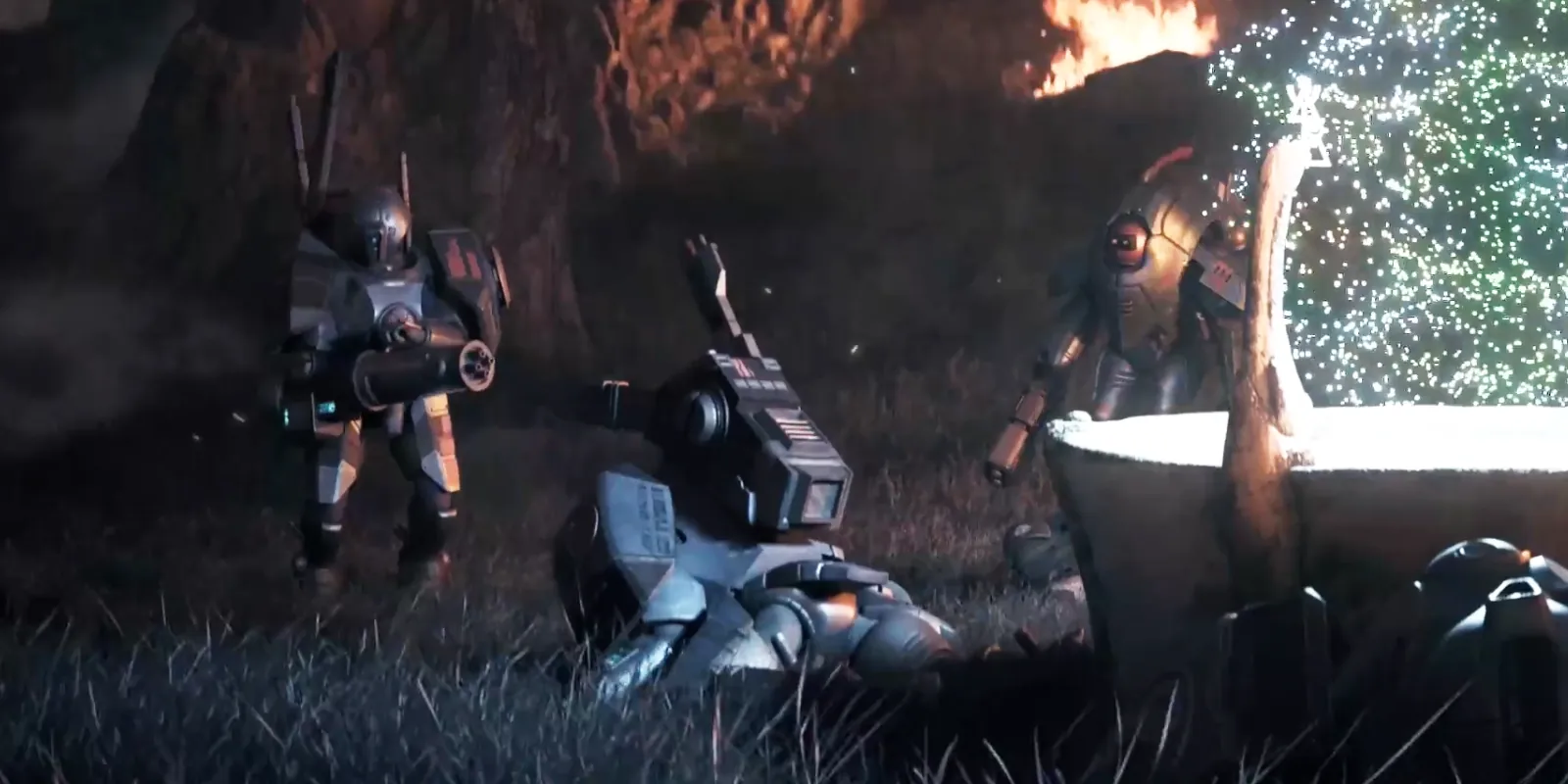
Nobody's happy. The Exodite, we learn from a voice-over, is angry that the immature empires have come to his planet. The T'au are angry that the Exodite disrupted their efforts toward the greater good. The Imperium, presumably, suspects that the T'au set up an ambush, or maybe they're just insulted. Whatever the case, the planet is being torn apart.
War as a backdrop
It's within this hellscape that the story occurs. Lako'ma and her team don't get involved in the war. They're special ops, avoiding battle in the interest of their primary objective: Apprehend the Exodite.
The setup is a kind of tutorial for wargamers on how an interesting mission can be created by including 3 factions in your story, or on how a skirmish game can happen within a larger wargame. War as a backdrop is one of my favourite atmospheric tricks. Like Władysław in The Pianist or the children in Jojo Rabbit, Lako'ma in The Exodite spends most of the series sneaking around war zones, avoiding combat. Her focus is so singular she won't even waste energy on stealth shielding, much less spend time to fight. They must apprehend their target, for the greater good of all.
The scenes of the battle around the T'au infiltration team are spectacular. They're the scenes your mind's eye tricks you into thinking your tabletop actually looks like as you play your wargames.
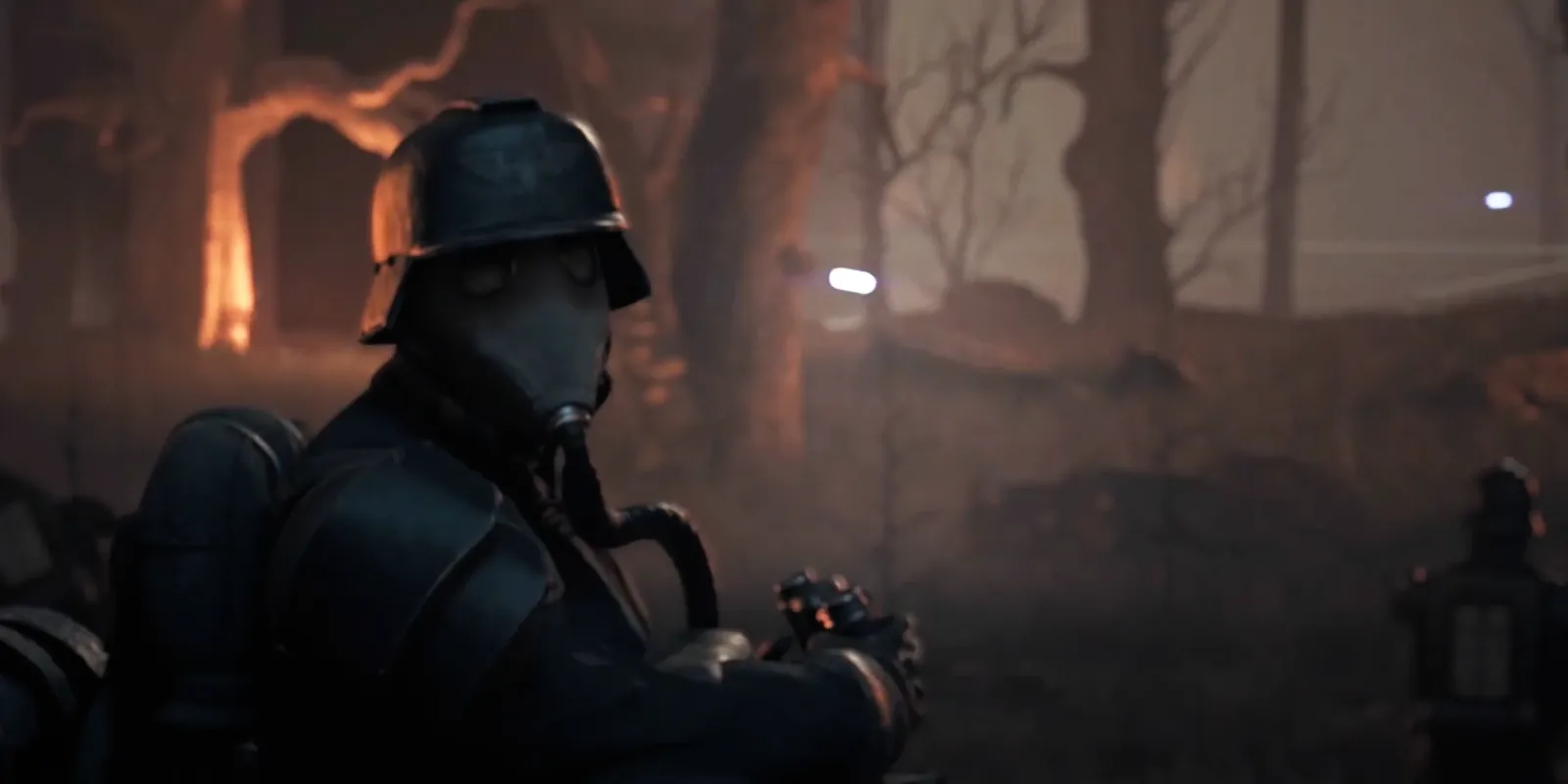
It's bleak, and firmly in the background. We don't hear any dialogue from the Astra Militarum characters, and very little from any T'au but our infiltration team. The trick in this story is to stay out of the way, and achieve the objective. That's not always easy, between charging infantry, advancing tanks, and towering Imperial Knights. The show spends 2 of its 3 episodes on the journey, and it's pretty tense.
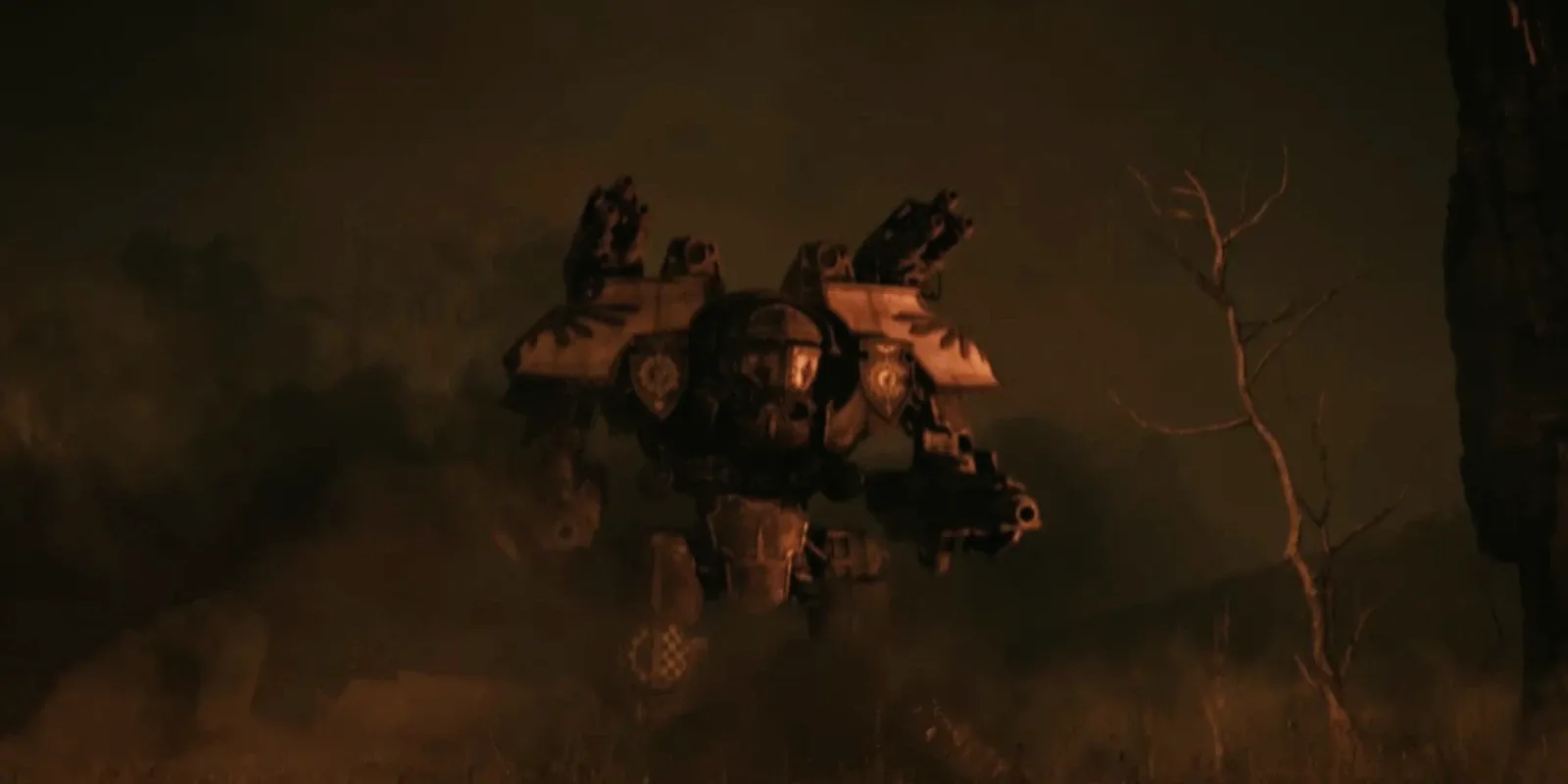
I don't think it's as tense as it could be, to be fair. Children of Men and Incendies do behind-enemy-lines better, but in context The Exodite works. After all, Lako'ma is far from a frightened civilian. She's an expert, and she's been entrusted to a difficult job. It's tense, but not crippling. We're watching specialists.
Battle shock
Because we're watching fearless specialists do specialised military things, the story isn't a very emotional one. There are a few story beats that seem like they were meant to be at least a little emotional, but that get drowned out by the latent agreement that this is war, and war is hell, so everything is the worst.
When one of the T'au crew gets killed in the chaos of war, I find it hard to empathise with Lako'ma, and in fact I'm not sure Lako'ma cares either. When Lako'ma does muster up enough emotion to do something rash, I don't share in her anger or despair. It's a highly dispassionate story, which maybe is not accidental. The Exodite is so profoundly successful at being an objective record of fictional future history that I suspect the feeling of battle shock is intentional. As a wargame, I enjoy the series for what it demonstrates about the logistics of fashioning a compelling battlefield scenario, for the lore about the factions involved, and for the spectacle of war in the 41st millennium. Maybe I'm not meant to feel any emotions in this series.
Soundtrack
The score is by the excellent Jonathan Hartman, which is what compelled me to watch the series in the first place. His music is really good, and Warhammer TV even has the soundtrack as a playable stream.
Good Warhammer
This is a good little series of a compelling and inspiring Warhammer 40,000 story. Watch it, and take notes for your next wargame, because it's packed with little details you'll want to incorporate into your own games. It may be low on emotional impact, at least for me, but it does a great job of delivering compelling objectives and some fantastic scenes of futuristic warfare.
All images in this post copyright Games Workshop.